
Many sales leaders believe that “coaching” is just another name for “managing.” They think it means running pipeline reviews and asking, “Is that deal closed yet?” But that isn’t sales coaching. That’s just a pipeline inspection.
True high performance sales coaching is a proactive, structured coaching process designed to improve the sales skills and behaviors of your reps, not just review their results.
This gap in understanding is what separates struggling sales teams from elite ones. Effective sales coaching is the single biggest driver of sales team performance. Yet, many leaders feel they don’t have the time or the right techniques to do it well. They focus all their energy on their underperformers, while the core “B-players” and top-tier “A-players” are left to fend for themselves. This approach is a direct path to stagnant revenue and rep burnout. This is where moving to a formal sales coaching program based on High Performance Coaching can fundamentally change your outcomes.
Let’s unpack the specific, high-leverage sales coaching techniques you can use to build a high-performing sales team that doesn’t just meet the quota, but crushes it.
Before we get to the techniques, we must align on a definition. Confusion here is the number one reason coaching efforts fail.
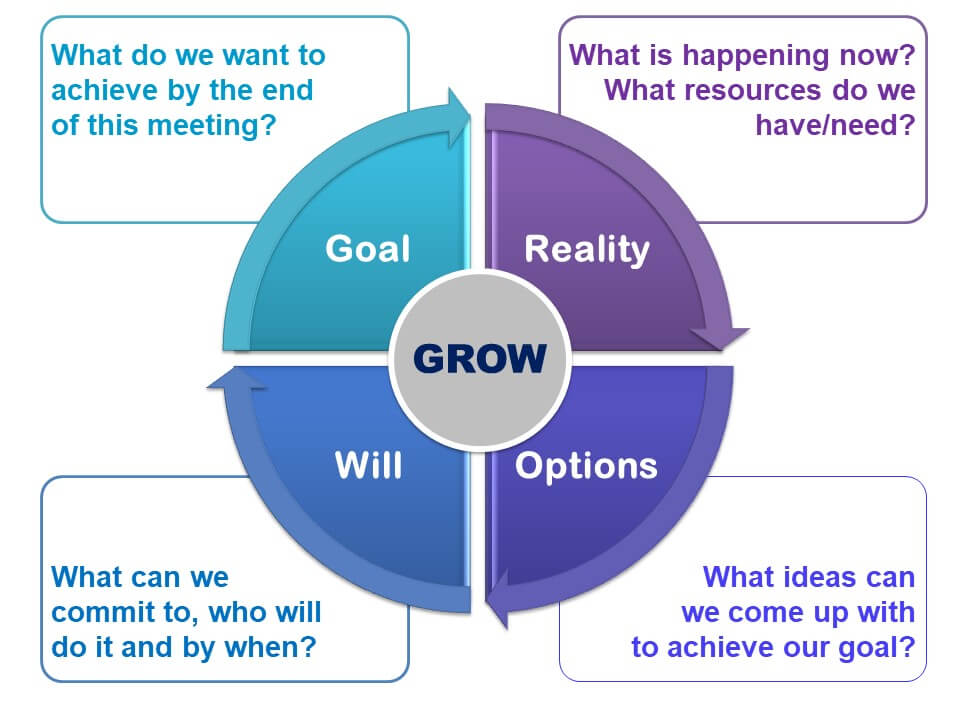
High performance sales coaching is a continuous, one-on-one process focused on improving a salesperson’s specific sales skills, behaviors, and mindset. Instead of just reviewing past results (like a pipeline meeting), it uses data, frameworks (like GROW), and techniques (like call reviews and role-play) to proactively develop a rep’s skill development and ability to win future deals.
Most sales management is reactive. A sales rep misses their number, and the sales manager steps in to “fix” them. This remedial loop only addresses the symptom (a missed quota), not the root cause (a skill gap).
High performance coaching is proactive. It assumes every team member has room for improvement. It’s a scheduled, rhythmic activity focused on the “how” (skill) behind the “what” (number). A sales manager inspects the pipeline. A sales coach improves the person.
Here are ten practical sales coaching tips you can implement to build a true coaching culture.
The most successful coaching sessions are not random conversations. They are structured. The GROW model is the most effective and widely used framework for this. It’s a simple, four-step process for guiding a rep to their own solution.
Pipeline reviews should be coaching sessions, not interrogations. Instead of asking “Is this closing?” ask “What’s the evidence this deal is qualified?” Use data to spot bottlenecks. For example, “I see your pipeline coverage is 4x, but your win rate at this stage is only 10%. This suggests a qualification problem in your sales process, not a closing problem. Let’s talk about that.” The data tells you exactly where to coach.
You cannot coach what you do not see. Review recorded sales calls and demos. In your 1:1, play a 5-minute snippet and pause it. Ask the rep to critique themselves first. Then, focus on one skill at a time. Don’t overwhelm them with ten criticisms. Pick one thing, like, “This week, your only focus is to set a clear ‘Up-Front Contract’ on every call.” This focused approach leads to real sales communication skills improvement.
Most reps hate role-playing because it’s done poorly. Ditch generic scripts like, “Sell me this.” Instead, get specific. Use real-life scenarios. For example, “We lost the Acme deal because legal got involved late. Let’s role-play how our sales strategy can bring up legal issues on our first call to prevent that.” This tactical practice builds real-world confidence.
Most sales managers spend 80% of their time on their bottom 10% and 20% on their top 10%. This leaves the “middle” 70% of the sales team—the solid, consistent B-players—with zero coaching.
This is a huge strategic error. A 5% performance improvement in your bottom 10% has almost no impact. But a 5% improvement across your “middle 70%”? That will completely transform your team performance and change your sales organization’s revenue trajectory.
Coaching isn’t just for people who are struggling. Your A-players are sales professionals who get bored, and if they aren’t challenged, they leave. Their coaching should be strategic. “You’re fantastic at selling to VPs. Let’s work on how you sell to a CFO. The conversation is different.” This shows you are invested and prepares them for their next role, which is key for career development and builds loyalty.
A sales manager’s default is to tell, but a good sales coach’s default is to ask. When a rep brings you a problem, resist the urge to simply give them the answer. Instead, guide them using Socratic questioning. For example, if a rep says, “My deal is stuck,” don’t offer a simple directive like, “You should email the VP.” Ask probing questions: “Why do you think it’s stuck?” “What do you know about their key priorities?” “What’s a different way you could show them value?” These coaching conversations teach reps how to analyze a situation, fostering the critical thinking skills they need to solve their own problems.
Sales is a game of psychological resilience. Acknowledge the difficulty of a tough loss, but help them reframe it. “What did we learn from that ‘no’ that we can apply to the next ‘yes’?” You should also praise effort and process, not just results. This positive feedback reinforces the winning behaviors that lead to long-term sales success.
This is where you get tactical on live sales opportunities. Hold a 15-minute pre-call strategy session for a critical meeting: “What’s our goal? What objections do we expect?” Then, hold a 5-minute post-call debrief immediately after: “How did that go? What are our next steps?” This creates a tight loop of preparation, execution, and review.
High performance sales coaching is not a “once a quarter” event. It’s a rhythm. This ongoing coaching is far more important than intensity. A 30-minute coaching 1:1 every week is better than a 3-hour session every quarter. In fact, Gartner research shows that effective sales coaching from sales managers can unlock an 8% improvement in sales performance.
How do you know if this is working? To measure sales coaching effectiveness, you must track both leading and lagging indicators.
If your leading indicators are improving, your lagging indicators will follow.
Sales training is a one-time event to teach knowledge to a group (like a workshop on virtual selling). Sales coaching is an ongoing coaching process to improve the skills development of an individual. Many companies combine training and coaching for continuous improvement.
You don’t find time, you make time. A sales manager must prioritize this. Audit your calendar for low-value tasks and meetings. Block your 1:1 coaching sessions on your calendar first and protect that time fiercely. This is a core part of your coaching plan.
Yes. The coaching relationship is different. Let them lead. Frame it as an “investment,” not “inspection.” Ask: “What skill do you want to develop to get to the next level?” or “What’s the one deal you’re most at-risk of losing? Let’s strategize on it.”
A comprehensive sales coaching program (or sales coaching plan) is a structured system, not just random check-ins. An effective program should include: a defined coaching cadence (Technique 10), a core framework like GROW (Technique 1), structured call reviews (Technique 3), and clear performance metrics to measure sales coaching effectiveness.
Moving from a sales manager to a high performance sales coach is the most important leap a sales leader can make. It’s the difference between inspecting results and developing the people who create them.
It doesn’t require a radical change overnight. Instead, start small. Pick one or two of these sales coaching techniques. Master the GROW model. Implement structured call reviews. Start coaching your “middle 70%.”
By shifting your focus from telling to asking, from reviewing the past to shaping the future, you build a high-performing sales team that is resilient, skilled, and motivated. As a result, they won’t just hit their quota. They’ll build a career, and you’ll build a sales engine.
If you are ready to implement a true high performance coaching culture in your organization, reach out to our team to see how we can help.

Paul brings over 25 years of experience leading high-stakes conversations with teams, executives, and organisations, having coached more than 100,000 people across 15 countries, spanning CEOs, Olympic athletes, scientists, entrepreneurs, and academics. Learn more about Paul.
